
ICT and COMPUTER SCIENCE
INTENT
Within the National Curriculum for computing there is a distinction between Computer Science, Information Technology and Digital Literacy. Digital Literacy, even on its own, is now essential for all members of society both for inclusion at a social level, but also for future employment potential. Employers are looking out for future staff who are confident with different types of software and programming, indeed we are quite possibly preparing our students for careers that do not even exist yet.
The aim of the Computer Science/ICT department is to encourage curiosity and creativity within the subjects as well as confidence to experiment in a safe environment. Technological progress is continuous and most of our students will have to constantly adapt to new applications and technology throughout their lives. It is therefore key to foster inquisitiveness and resilience by dispelling the fear of failure at trying new things, so that they can really develop their potential.
The aims of the Computer Science/ICT department are to reflect the strands within the national curriculum.
- All pupils can understand and apply the fundamental principles and concepts of computer science, including abstraction, logic, algorithms and data representation. (Computer Science)
- All pupils can analyse problems in computational terms, and have repeated practical experience of writing computer programs. (Computer Science)
- All pupils can evaluate and apply information technology, including new or unfamiliar technologies, analytically to solve problems. (Information Technology)
- All pupils are responsible, competent, confident and creative users of information and communication technology. (Digital Literacy)
Even just on a practical level, students need to be taught the skills to access their learning across many platforms such as Office 365, browser based applications and Edulink so that they can become confident at navigating their way around the software, accessing their education regardless of subject/curriculum.
IMPLEMENTATION
all year groups students are taught how to use Office 365 efficiently and proficiently so that they can access their emails, assignments (in Teams), manage their files and locate documents that have been shared by peers or members of staff. This is an essential skill as part of the school’s blended learning approach.
Key Stage 3 (Years 7, 8 and 9)
In Key Stage 3 we aim to foster an interest and a love of all things to do with computers.
There two distinct routes within the department, Computer Science and ICT. It is vital to prepare students for either option so that they can be sure of making the choices that are right for their pathway/career.
The curriculum over years 7,8 and 9 is designed to cover aspects of each subject so that the students can engage in areas from both. These include:
Year 7
- E-Safety and digital literacy (Curriculum strand 4)
- Snap Programming (Curriculum strand 1 and 2)
- The Internet of Things (Curriculum strand 3)
Year 8
- Web Interface Design (Curriculum strand 3 and 4)
- Web Technologies Design and Creation (Curriculum strand 3 and 4)
- Introduction to Python (Curriculum strand 1 and 2)
- Parts of a computer, Requirements, Software, Basic Networking (Curriculum strand 3 and 4)
- E-Safety and Wellbeing (Curriculum strand 4)
- Animation (Curriculum strand 4)
Year 9 – Taster year
- Introduction to Spreadsheets (Curriculum strand 3)
- Binary numbers (Curriculum strand 1)
- Python Intermediate (Curriculum strand 1 and 2)
- Cybersecurity and Legislation (Curriculum strand 4)
- Flowcharts, Logic and Sequencing (Curriculum strand 2)
- Networking and Parts of a computer (Curriculum strand 1 and 3)
Students are encouraged try a number of different industry recognised software applications to teach them digital literacy across the board. They may also need to use software in other subject areas within the school so it is key to broaden their skillsets so that they are able to confidently apply their digital skills to adapt to whatever they are required to do. This could be creative work such as photo editing, design and user experience, or critical analysis for problem solving.
For students who have not opted for the taster year in Year 9, there are a series of Impact events held later in the academic year to ensure the complete coverage of the National Curriculum.
Extra Curricular
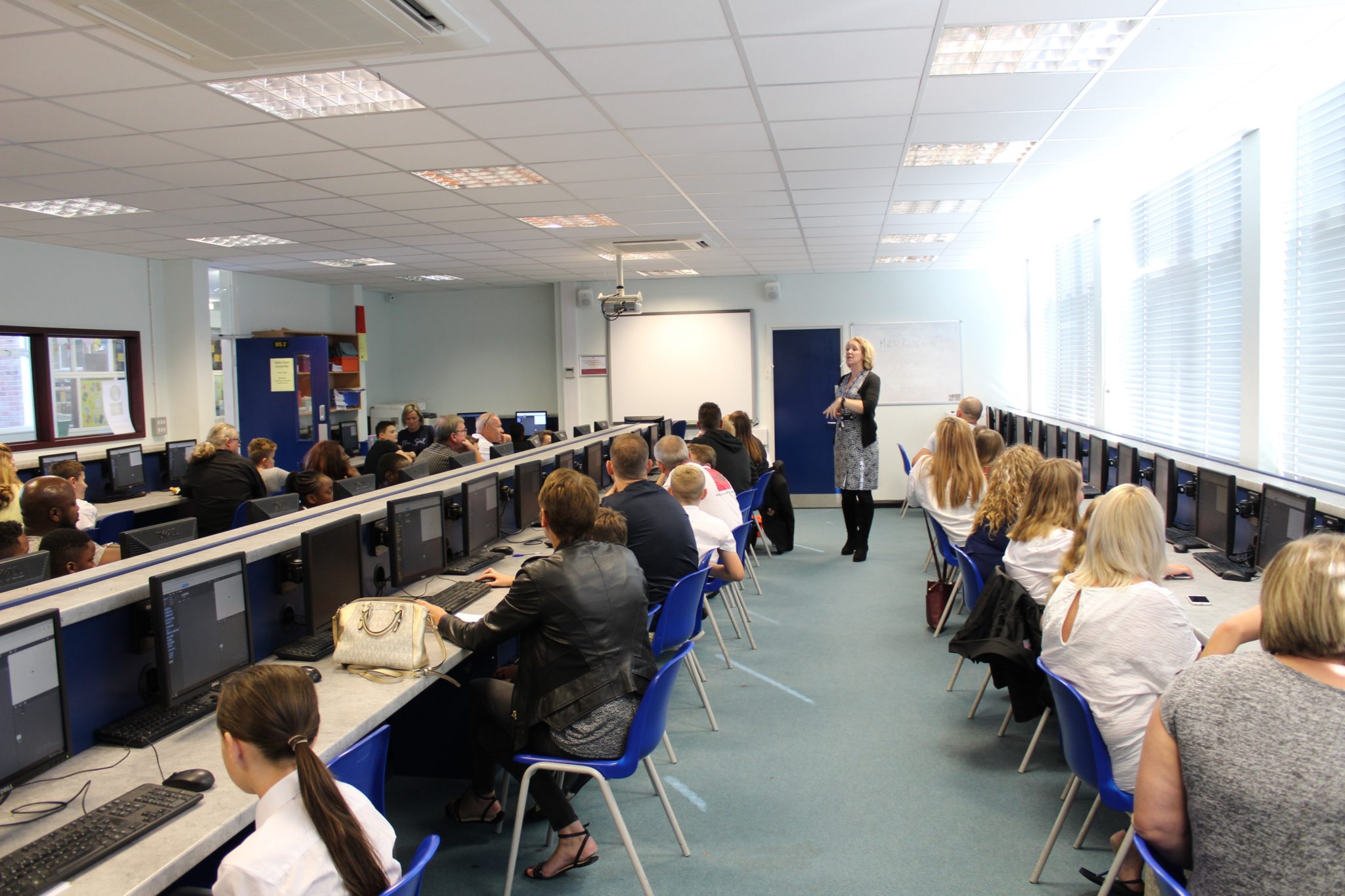
We are keen to encourage parents to be able to support their children with their studies, so we have run workshops in Year 7 and Year 10 (at the start of the students’ GCSEs) that shed light on what we do in the classroom. The feedback has always been really positive and we love to meet the parents!
Year 9 Tech Girls Challenge
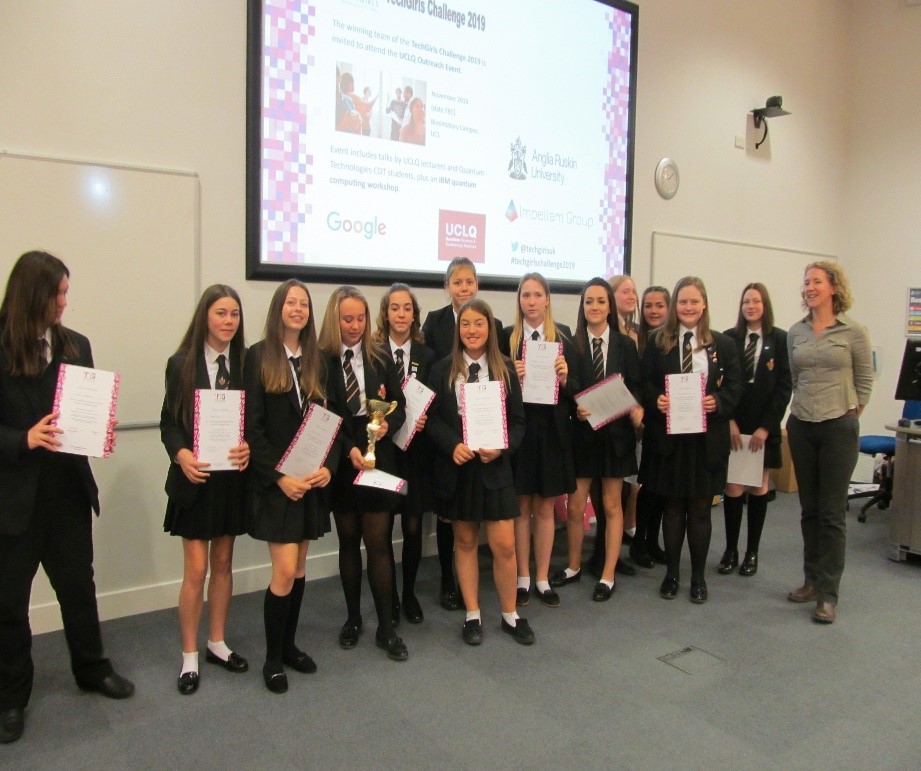
Nationally, there is a huge shortage of girls taking up STEM subjects (and, as a result, working in STEM industries) and here at Beauchamps we are passionate about reversing this trend by breaking down the stereotypes and misconceptions that surround Computer Science and ICT. We have run a number of Tech Girls Challenge workshops and we have won two awards! One of our students even won a special award for an outstanding entry.
Key Stage 4 Year 10 and Year 11
For students who have not opted for either the Computer Science or ICT qualifications at this stage, there are a series of Impact events held later in the academic year to ensure the complete coverage of the National Curriculum in addition to coverage of the Online Privacy and Safety in RSE earlier in the academic year.
Two different courses are available to our students.
COMPUTER SCIENCE GCSE
Examination Board: OCR (Syllabus Number J277)
Why should I pick this and what will I study?
This qualification has been created to get students working with real-world programming and provides a good understanding of the fundamental principles of computing. Employers are increasingly looking to recruit programmers who are proficient in the Python programming language which we use here at Beauchamps to deliver the course. The syllabus been designed to assess candidates’ achievement through external exams.
The areas covered by the external exam are:
- System Architecture
- Memory and Storage
- Computer Networks, connections and protocols
- Network Security
- System Software
- Ethical, Legal, Cultural and Environment impact of Digital Technology
- Algorithms
- Programming Fundamentals
- Producing Robust Programs
- Boolean Logic
- Programming Languages and Integrated Development Environments
BTEC LEVEL 1/2 TECH AWARD IN DIGITAL INFORMATION TECHNOLOGY
Examination Board: Pearson (Syllabus Number 603/2740/6)
Why should I pick this and what will I study?
The Edexcel BTEC Level 1/2 Tech Award in Digital Information Technology has been designed primarily for young people aged 14-19 (here at Beauchamps High School it’s for 14-16 year olds and not offered at sixth form) who may wish to explore a vocational route throughout Key Stage 4. It is also suitable for other learners who want a vocationally focused introduction to this area of study. This course has been developed to inspire and enthuse learners to become technology savvy – producers of technology products and systems, not just consumers. It gives learners the opportunity to gain a broad understanding and knowledge of the Information Technology Sector and some aspects of the creative industries (e.g. electronic publishing or multimedia production). Exploring the fundamentals of technology and gaining the practical skills, knowledge and understanding to design, make and review, how to encourage personal development, motivation and confidence, through practical participation and by giving learners responsibility for their own projects.
KS5 (Year 12 and Year 13)
Two different courses are available to our students and it is likely that students would study one OR the other.
COMPUTER SCIENCE A LEVEL
Entry requirements: Grade 6 or above in GCSE Computer Science
Why should I pick this and what will I study?
Advances in computing are transforming the way we work and the Computer Science A-Level allows students to keep up with the times. The course focuses on the knowledge, understanding and skills students need to progress to higher education or thrive in the workplace. It is the perfect pre-cursor for accessing many undergraduate degree courses, with universities looking extremely favourably on a student including this on their portfolio of qualifications. Students will study the following areas:
- Fundamentals of programming
• Fundamentals of data structures
• Fundamentals of algorithms
• Theory of computation
• Systematic approach to problem solving
• Fundamentals of data representation
• Fundamentals of computer systems
• Fundamentals of computer organisation and architecture
• Consequences of uses of computing
• Fundamentals of communication and networking
• Fundamentals of databases
• Big Data
• Fundamentals of functional programming
BTEC LEVEL 3 NATIONAL EXTENDED CERTIFICATE IN INFORMATION TECHNOLOGY
Entry requirements: Four GCSE Grade 4 or above, including English and Mathematics
Examination Board: Pearson (Syllabus Code 601/7575/8)
Why should I pick this and what will I study?
BTECs are a learner-centred approach to study with a flexible, unit based structure and knowledge applied in project-based assessments. Students completing their BTEC Nationals in Information Technology will be aiming to go onto employment, often via the stepping stone of higher education. This qualification is being offered because it has been developed in close collaboration with experts from professional bodies, businesses and universities to ensure that students have the highest quality preparation for progression onto the next stage of their lives.
This course works extremely well alongside other BTEC provisions offered at Beauchamps High School, allowing our students to achieve a well-rounded experience that can prepare them to step straight into an apprenticeship or access a university placement.
Course structure:
• Information Technology Systems
• Creating Systems to Manage Information
• Using Social Media in Business
• DataModelling OR
• Website Development
IMPACT
Here at Beauchamps High School we are passionate about enabling our students to see and use technology in as wide a context as possible so we also try to work with other departments to ensure cross-curricular application. The courses offered at this school have many real world scenarios which help students understand why they are studying the topics and really put things into context for them, especially when it comes to looking at their career choices. Many of the concepts used in the courses we offer allow students to develop their problem solving skills, logical thinking, aiming high , creativity, staying positive, all essential skills in life. We also interweave these skills in every lesson delivered. Designing, developing and analysing software and hardware used in everyday life can only enhance a student’s understanding of the things that enable progress. Technology is ubiquitous and underpins everything that we do so it is natural that we should prepare our students for the developments and changes they will inevitably experience throughout their lives – but with a resilience and curiosity that will shape their success.